

Visiting the Ann Hamilton exhibition “We will Sing” was a complete surprise to me, I had done my homework and had watched the 20-minute YouTube video where she explains how the work was put together but was not ready for the initial impact it would have on me.
The exhibition occupies the top floor of the Salts Mill Gallery, so it was quite a climb up the stairs, as with all the Bradford City of Culture event I greeted by one of the charming event volunteers. It has been a feature of all the events celebrating the City of Culture 2025 that it has involved a huge volunteer effort; all the volunteers I met have been briming with knowledge and enthusiasm for the events.
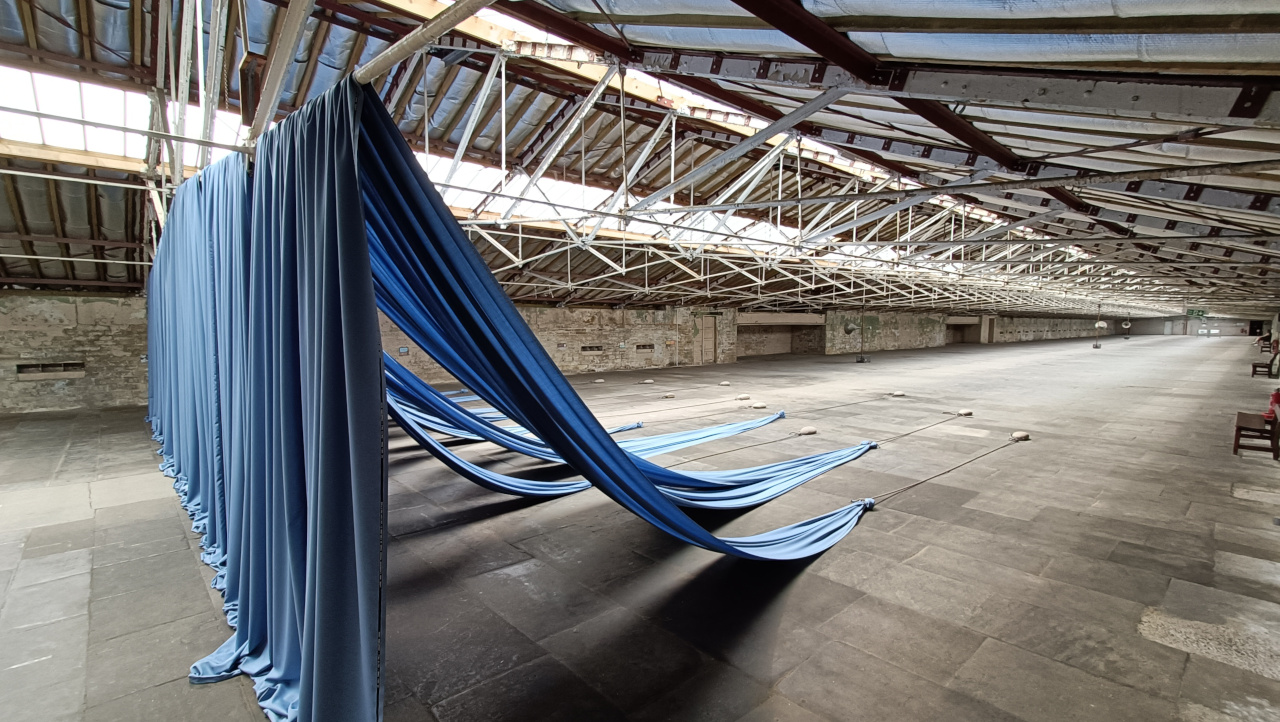
The entrance is dark the dimly lit far wall steel cages holding raw wool as though it is ready for processing. There is a distant whistling like a lone factory worker is just around the corner. Drawn to the light and sound coming from the doorway into the spacious main hall. It has quite an impact, the mill is a staggering 150 metres in length, together with the vocal score written by Emily Eagan creates a haunting atmosphere in the colossal space. The soundscape is played through 3 rotating powerful speaker horns, recovered from the mill. At the far of the area drapes form an opulent back drop to the phasing counterpoint created by the separate speaker horns. The wool & textiles trade is very much a part of Bradford history that is celebrated in this work with local suppliers used to provide the raw material for this work. It was interesting to note the detailing stitched into each of drapes providing information about the type of material, manufacturer and purpose of the cloth.
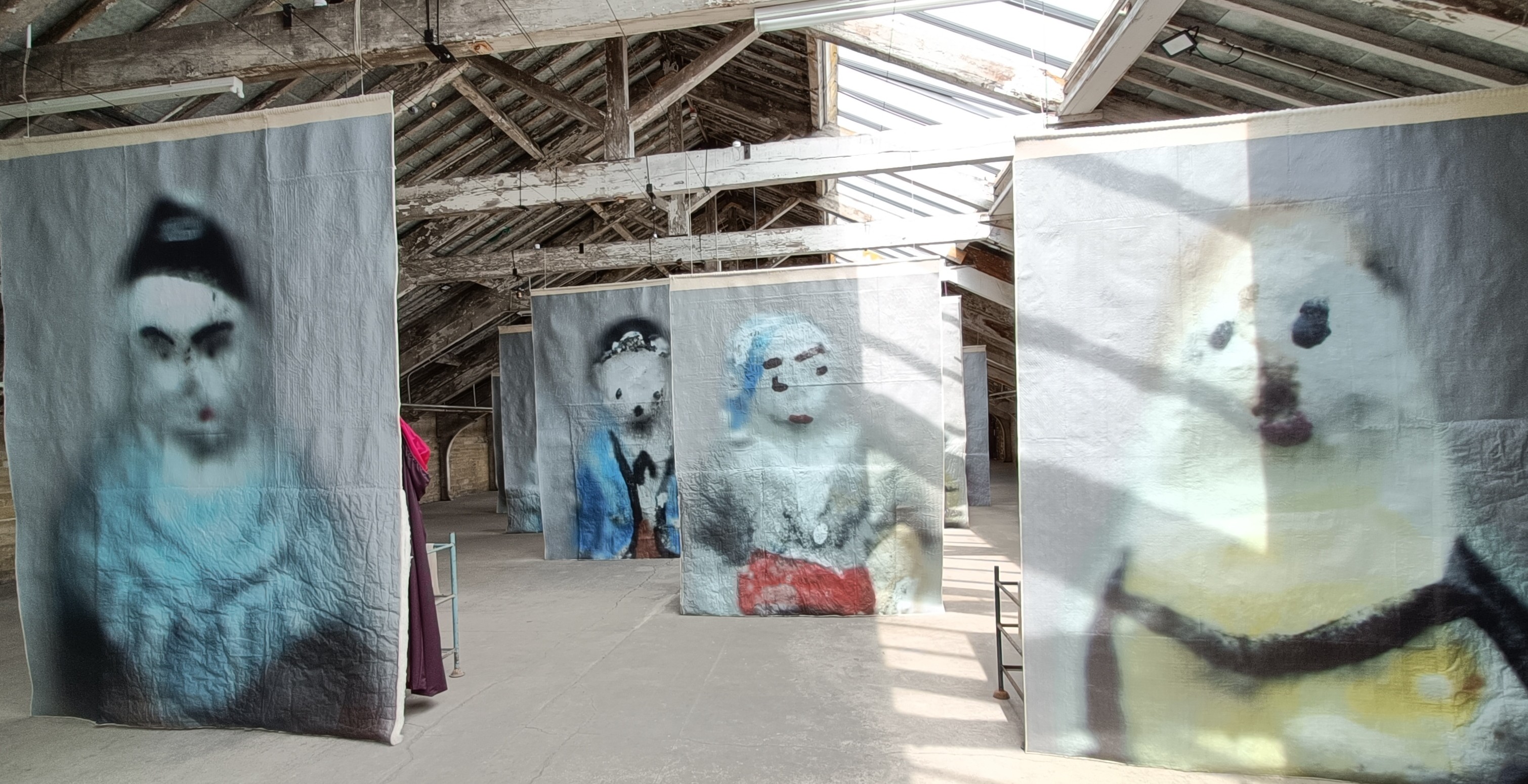
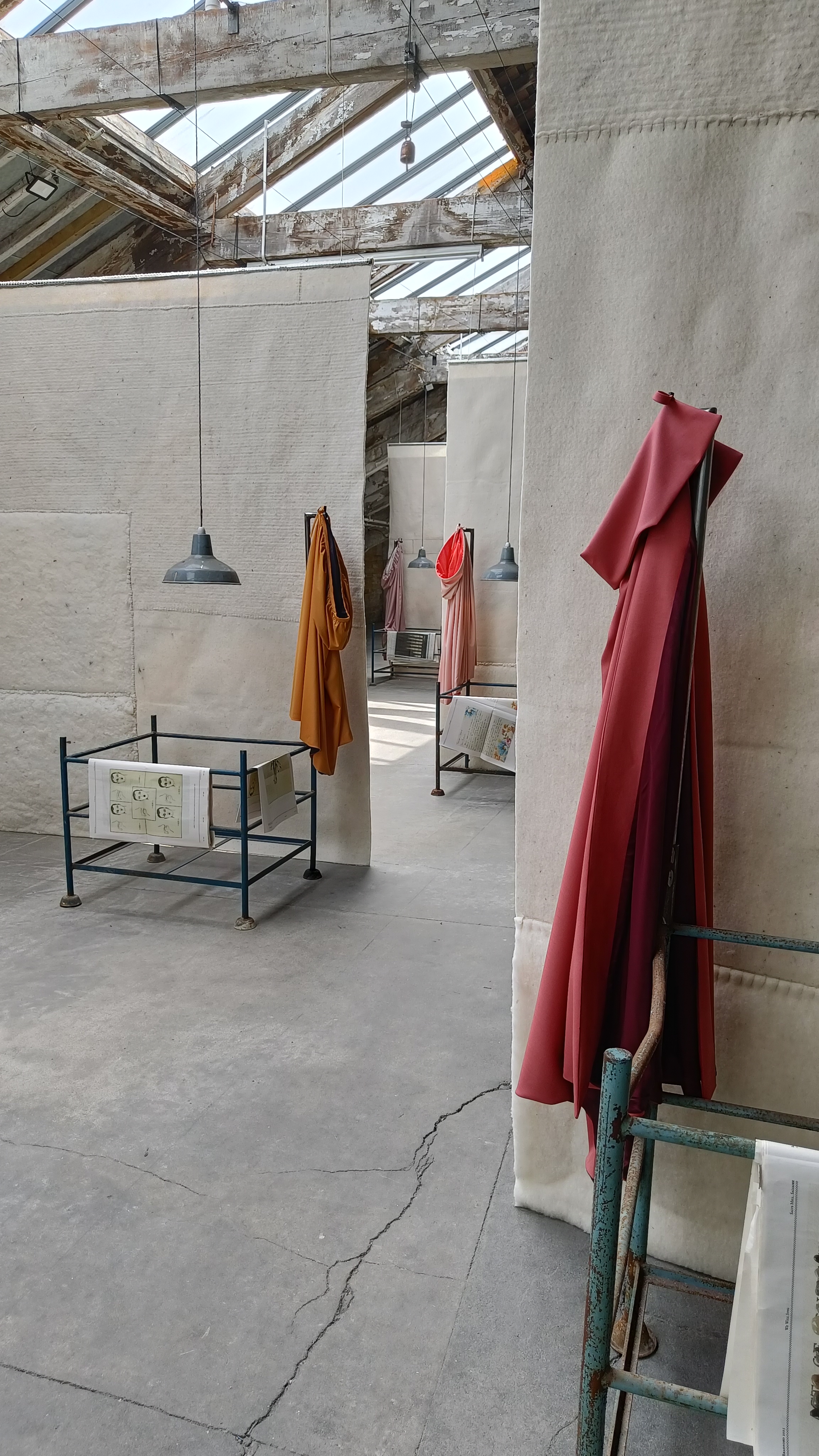
Passing back through the dark connecting hallway to the next gallery space visitors are confronted with a series of ghostly figures printed onto thick woollen material all of them being suspended on wires and pullies reminiscent of the drive belts that would have been used to drive heavy textile machinery in the past. Behind each hanging figure is a hatstand with a plain coloured mohair cloak and metal rail with several sheets of newsprint laid across the top rail. Each image was unique, each cloak would have its own vibrant colour, and each rail would have it different content on the newsprint sheets. Each part of the installation reminded me of a factory where the workers had just left for some unexplained reason. Leaving their cloak behind and the newsprint instructions for the work they were doing. The mysterious unfinished job incomplete all that remained was their ghostly image next their workstation. Examining the newsprint sheets held clues on how the exhibition was put together, the scale and detail of this work was enormous, I felt like an archaeologist exploring a long-forgotten tomb.
At the far end of this hall passing into a smaller exhibition space the source of the ever-present Emily Eagan soundscape is revealed; six automated vinyl record decks play the sound source in a strict canon. The vinyl recording involved a local junior school in a singing and song writing project to produce material for the score.
Hamilton describes how the installation draws on memory and imagination that weaves together voice, song and printed word materials and images sourced from locally. The scale of the work is colossal, having many layers and stakeholders participating, and yet as a whole it maintains coherency.
We are all invited to continue to participate by writing a letter to the future. It will be interesting to see how Bradfordians will respond to this challenge.
 VicBerry.net